
|
Getting your Trinity Audio player ready...
|
The Racquet Club Estates and Desert Park Estates neighborhoods sit side by side, their histories entwined. The avant-garde architects that built the homes and glamorous stars like Steve McQueen and Debbie Reynolds that lived and entertained in them put the areas on the map, securing their reputations as exclusive places to live and play.
Racquet Club Estates: A Legendary Stretch of Palm Springs
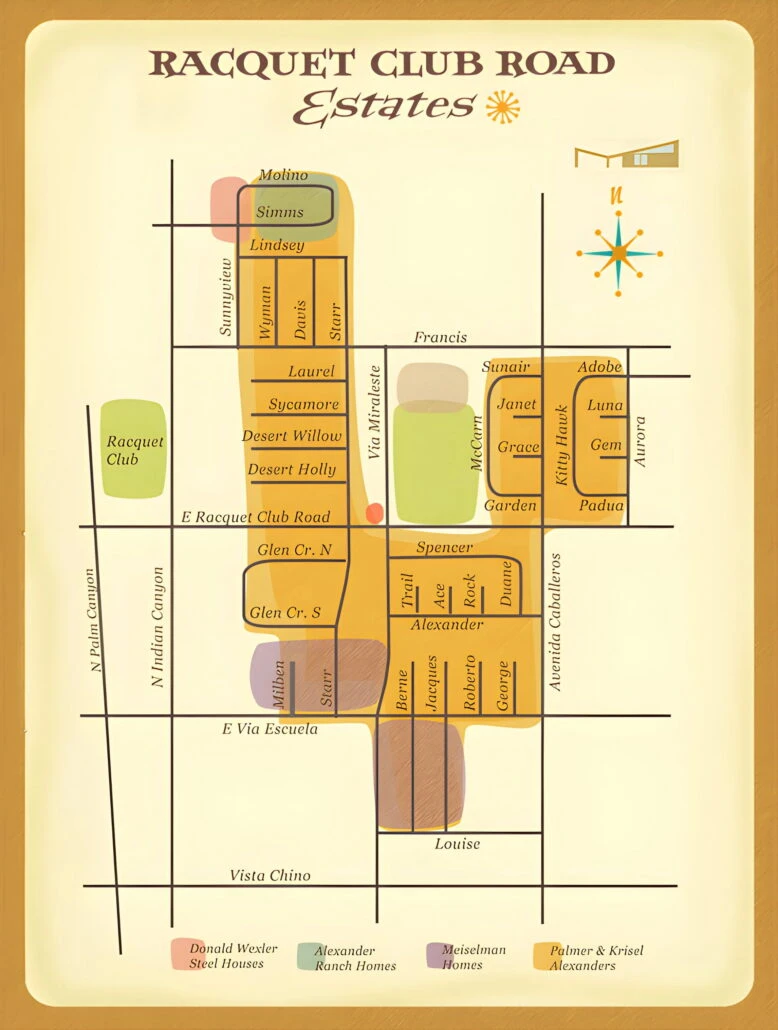
Racquet Club Estates is filled with historically important homes. Photo courtesy of Racquet Club Estates
Set in the north side of Palm Springs, this neighborhood came up in the late 1950s, named after the famous Racquet Club, a members-only establishment where celebrities mingled. It’s also where Marilyn Monroe is rumored to have gotten her big break while being photographed by the pool. The surrounding streets soon became the perfect spots for members of the elite club to buy vacation homes.
Many of the neighborhood’s homes were built by mid-century architects and developers who are now as famous as their celebrity clientele. Dan Palmer and William Krisel, partnering with Alexander Construction Company, designed several homes, taking into consideration the sweeping desert mountain views, the climate, and lifestyle. Signature elements of the single-family tract homes were butterfly roofs, clerestory windows, breezeways, post-and-beam construction, and indoor/outdoor living.
Jack Meiselman and his wife Bernie developed homes near the southern border of the neighborhood that were comparable to Palmer & Krisel, but with key differences. Most notably, Meiselman favored galley kitchens over open concept, and master bedroom suites were placed on the opposite side of guest bedrooms for additional privacy.
Donald Wexler, in partnership with Richard Harrison and Alexander Construction Company, created the Steel Development Houses. Chosen for their resiliency in the harsh desert climate, 38 modular homes made of steel were initially set to be built, with floor to ceiling windows, flat roofs, and open floor plans. The rising costs of steel truncated the project to seven. After a period of preservation, these homes are now designated as Class 1 Historic Sites.
The Raquet Club Estates neighborhood is a now seen as a peaceful community and an ideal area to walk and bike and enjoy the surrounding views of the San Jacinto Mountains. Victoria Park offers green spaces, a colorful playground, and covered picnic tables for gatherings shaded from the sun, as well as a historic totem pole. Gifted to the city in 1968 by Victoria, British Columbia (then the city sister to Palm Springs), the totem pole was crafted by master carver Henry Hunt and restored in 2015.
The owner of The Adler, Broadway star Stubby Kaye’s former residence, welcomed more than 600 people to her home when it was on the Modernism Tour in February. When asked what she most loves about the Racquet Club Estates, she replied, “it’s easy, inviting, and peaceful.”
When you’re in the mood for something livelier, it’s a short distance to some of the city’s restaurants and shops, including the classic Billy Reed’s restaurant, the popular Bread & Flours Bakery, and dog-friendly bar and restaurant Boozehounds.
Desert Park Estates: Home to Many Architectural Styles
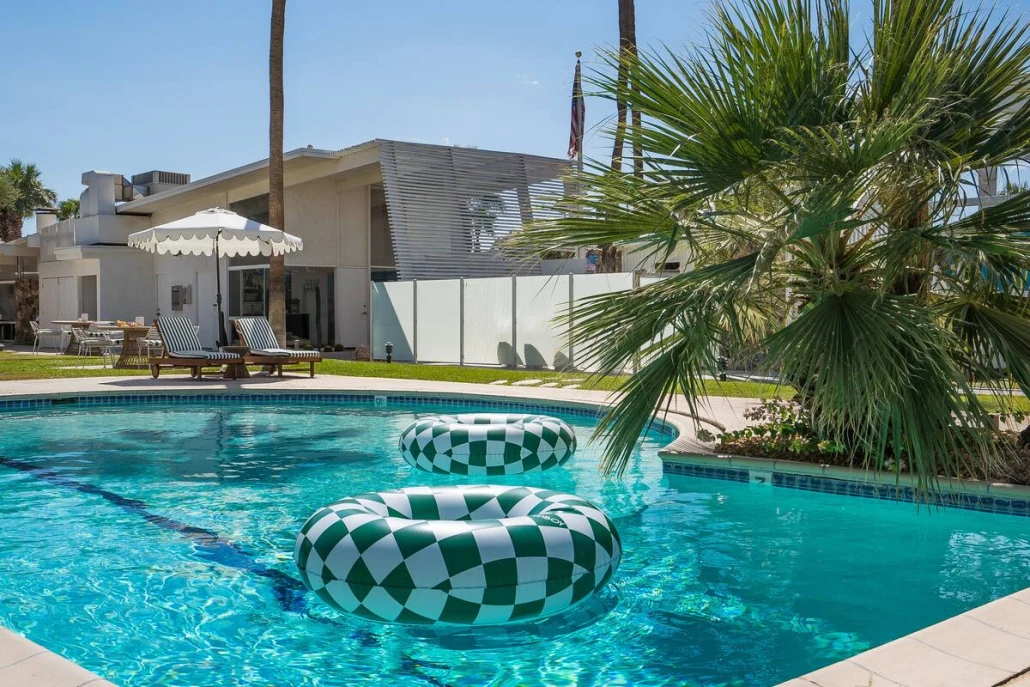
Cool off in a mid-century modern treasure. Photo courtesy of The Monkey Tree Hotel
Northeast of Racquet Club Estates, wealthy real estate developer Noel Clarke established the renowned Ranch Club in the 1950s. Covering 1,000 acres, the expansive resort boasted 200 rooms, an 18-hole golf course with man-made lake, tennis courts, riding stables, multiple pools, and nightclubs.
Adjacent to the club was land Clarke desired to be residential, and he hired prominent architect and Ranch Club member Hugh Kaptur to design about half a dozen mid-century model homes with post-and-beam construction and sloped roofs. These homes now share space in the neighborhood with a mix of architectural designs, including traditional ranch style, Spanish Revival, Mediterranean, and contemporary homes.
As in Racquet Club Estates, residents of Desert Park Estates appreciate the tranquil neighborhood, tucked away from but within walking distance to shops and eateries.
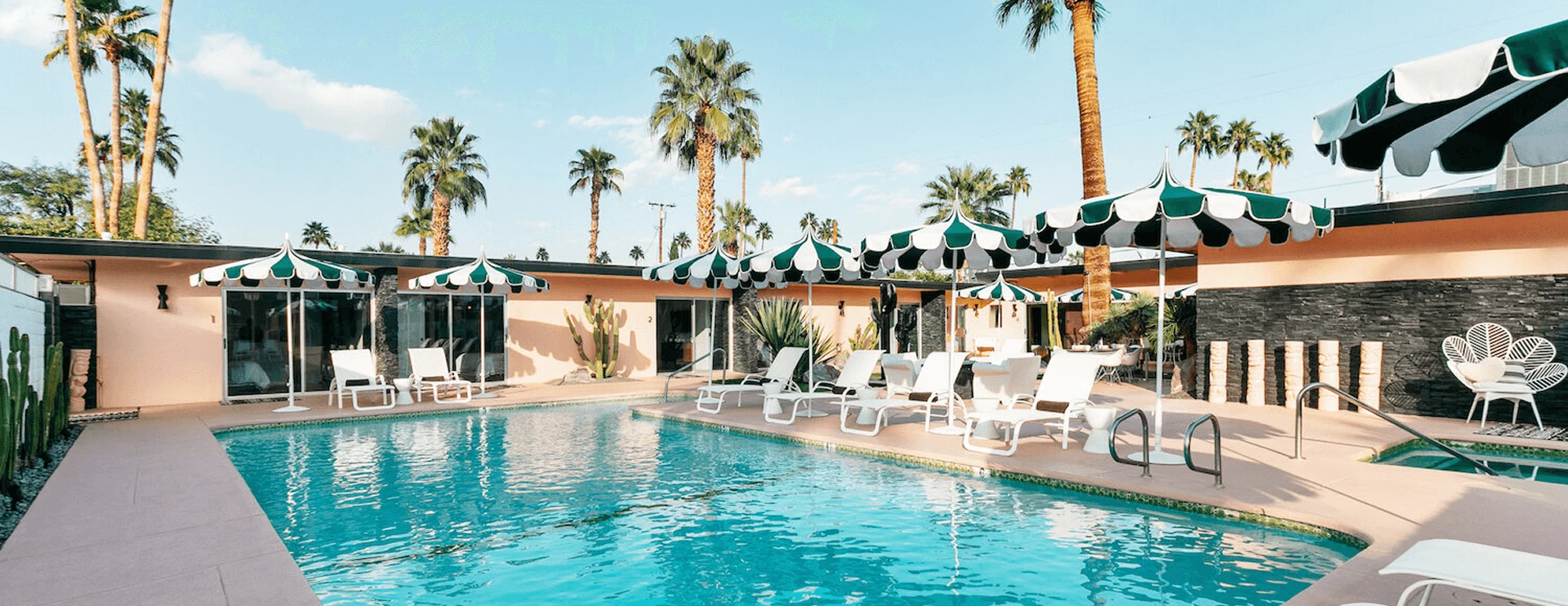
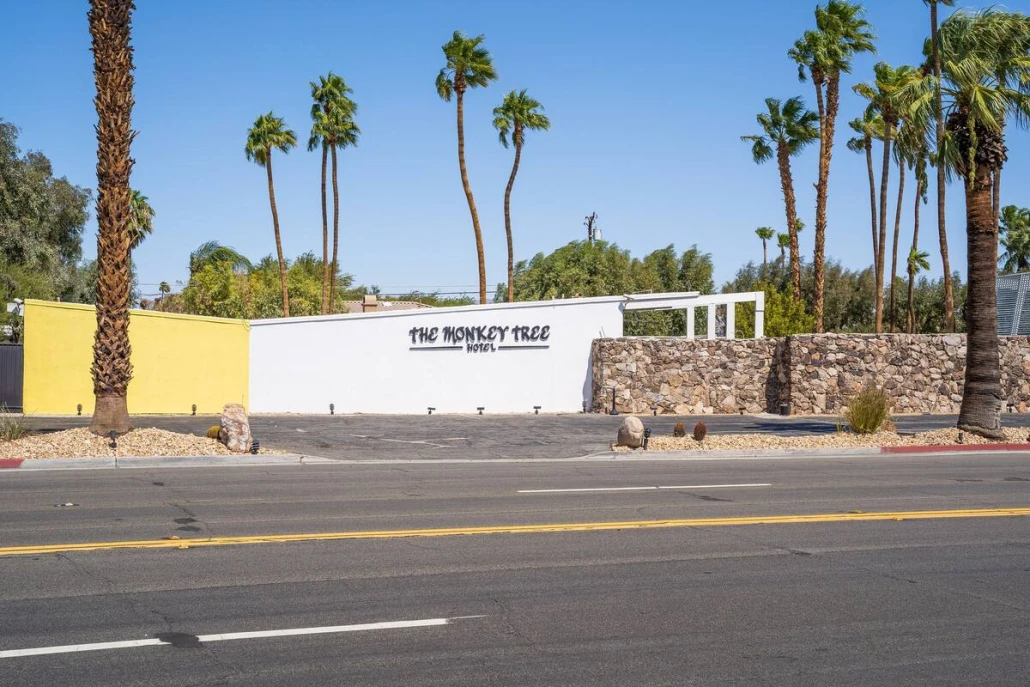
Experience the neighborhood firsthand with a stay at The Monkey Tree Hotel, a boutique mid-century resort. It’s one of the few designed in 1960 by a woman, Colleen Carol Crist. Architect Kathy Friedle restored the hotel before its reopening in 2016. Enjoy the sauna, hot tub, and cold plunge in addition to the heated pool. The 16-room resort is a perfect place to retreat on your own or gather small groups. It offers contactless check-in and check-out, making it even easier to experience what it’s like to be a local.
Whether you choose to stay in the neighborhood or nearby, enjoy visiting Racquet Club Estates and Desert Park Estates. These serene neighborhoods hold the glamour and beauty of their history, along with a relaxed life of leisure vibe you can step into and enjoy.